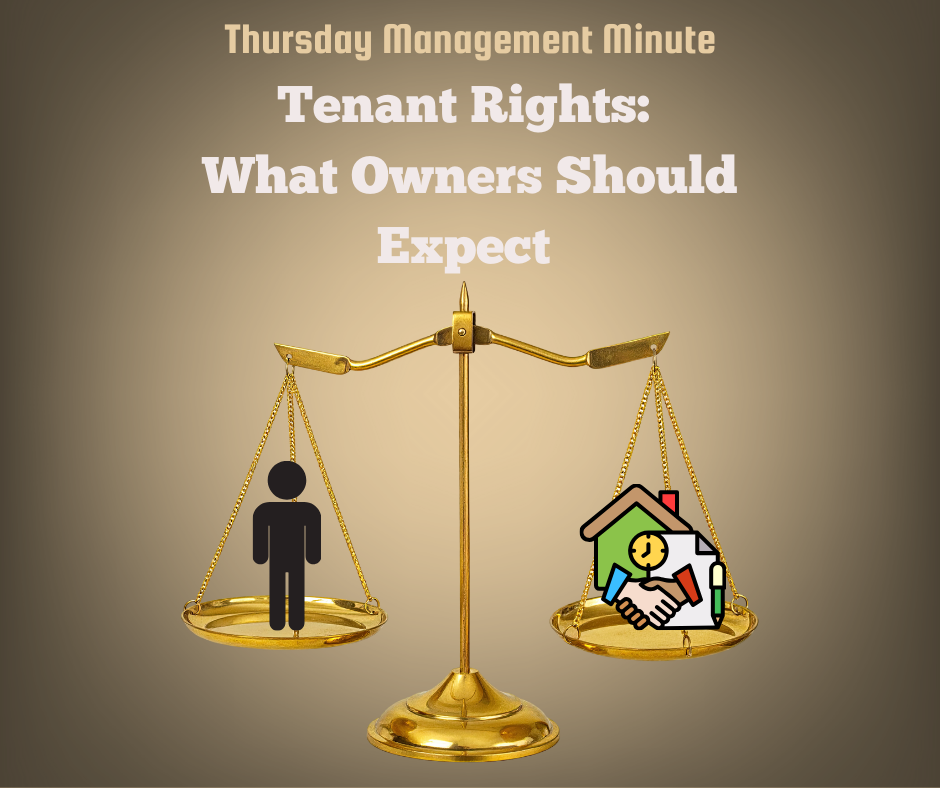
When it comes to renting out your home, there are many legal obligations that come with the income potential. Tenant rights are not optionable or negotiable, and understanding these rights protects the homeowner, property, finances, and liability exposure.
Core Tenant Rights:
There are core tenant rights that every housing provider should know. Those include but are not limited to, the right to a habitable home, right to privacy, right to fair housing protections, right to legal eviction process, as well as security deposit protections.
Every tenant has a right to safe, sanitary, and functional living conditions; essential systems such as plumbing and HVAC must be operational. Structural and safety issues are the owner’s responsibility.
The right to privacy entails that owners are required to give tenants notice of someone (like maintenance or the owner themselves) entering the property, and entry must be for legitimate or emergency reasons.
Fair housing protections are granted to all tenants and potential tenants, screening must be consistent and non-discriminatory.
Tenants are also granted the right to the legal eviction process; homeowners must go through the proper steps to evict a tenant.
Security deposit protections are set so owners cannot use the security deposit as a general repair fund, and deductions must be documented and lawful.
What Homeowners Should Expect:
Homeowners should expect the transition from homeowner to landlord. Which requires a comprehensive, legally compliant lease, rigorous tenant screening, and active maintenance management. Expect to conduct thorough background, credit, and employment checks. A comprehensive lease agreement that covers rent amounts, due dates, security deposits, pet policies, and maintenance responsibilities is required.
Financial literacy and management are key skills that landlords are expected to exercise. They should prepare for expenses beyond their mortgage, looking into property taxes, homeowner association fees, insurance, and maintenance costs.
Homeowners turned landlords, should also be aware of the nuances of tenant rights. Not every inconvenience qualifies as a lease violation. For example, in a lease it states that the tenant is responsible for the upkeep of the property, including landscaping areas. However, when the landlord completes an inspection, they find that the yard is patchy, there are dying plants, and there is trash everywhere, and they find that the inside of the house is not up to their standards of cleanliness. But the interior and exterior of the property do not require any repairs or maintenance outside of the yard. In an instance like this, the landlord can issue a lease violation for the yard, because it is not upkept. However, even though the interior of the house is dirty by the landlords’ standards, they cannot issue any violations regarding this because there are no repairs or maintenance issues that need to be handled.
Professional management over self-management means that you reap the benefits of owning a rental property, without the stress of being a landlord. Professional property management is there to enforce the lease and handle legal compliance while reducing risk for the homeowner. Strong management creates structure, accountability, and legal protection for the owner.
When it comes to being a landlord, tenant rights are a part of operating a rental, not an obstacle. Owners who are informed on tenant rights and are prepared for the expectations that come with owning a rental property are the most protected. Experiencing fewer disputes and lower legal risk, compliance is a key component of long-term property performance.
Stay connected with Sin City Real Estate & Management. Read every Thursday for a new edition of our Thursday Management Minute. A weekly insight into effective and up to date information on real estate and property management. Check us out on social media with the username @sincitymanagement.