
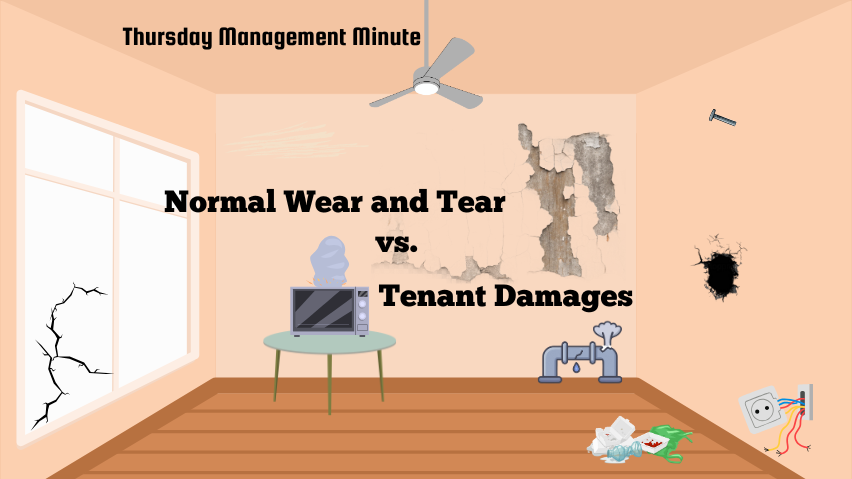
One of the most common sources of landlord-tenant conflict comes down to a single question: wear and tear or tenant damage? It is important for owners to have clarity on the distinction between the two. Knowing the distinction and following fair expectations allow for landlords to stay in compliance and avoid legal risk. Distinguishing normal wear and tear from chargeable damage protects owners financially while maintaining transparency and compliance with landlord-tenant laws.
General landlord-tenant principles establish a reciprocal relationship. Landlords must provide safe, habitable conditions while respecting tenant privacy. Tenants must pay rent on time, maintain the property, and follow all lease terms. The lease is the outline of all rules and agreements between the landlord and tenant. There are laws that cover deposits, leases, repairs, entry, and eviction. These laws vary from state to state but principles generally require fair practices and sticking to local codes.
Normal wear and tear can be described as a gradual and expected deterioration of the property due to normal use. Which is ultimately the landlord’s responsibility, which is why it is important for landlords to be able to identify the difference. There are factors that must be considered when inspecting for wear and tear. Keep in mind how long the tenants resided in the property, and the number of occupants on the property, as well as the age and quality of materials. Common examples of wear and tear include faded paint, minor scuffs and nail holes, along with worn carpet in high-traffic areas.
Damage resulting from negligence, abuse, or intentional actions that affect the property, appliances, or utilities may be charged to the tenant. There are two types of damages, cosmetic and functional. Cosmetic damages only affect the appearance, while functional damages affect the safety or performance of an appliance or the property. Wear accelerated by neglect occurs when there is a failure to maintain the property or appliance causing premature damage or aging. Common examples are large wall holes, unauthorized paint, broken fixtures or appliances, as well as pet damage beyond normal use.
Landlords should consider the best practices when it comes to documentation and lease procedures. Landlords should complete move-in and move-out inspections, once before the tenant moves in and once after the tenant moves out. Inspections should include proper photo and video documentation of damages and the condition of the property. The lease should have clear and understandable language, with the tenant aware of the fine print before signing.
The role of property management gets rid of the landlords’ involvement, meaning that the property management company handles the details for the landlord. Sin City Real Estate and Management—a leading property management company—provides objective assessments and consistent enforcement of standards, ensures compliance with state and local laws, as well as handles transparent communication with tenants.
Knowing the difference between normal wear and tear versus chargeable damages protects owner assets, while avoiding improper charges and reducing disputes and legal risk. The best way to reduce legal risk and disputes is with a reliable and trustworthy property manager. Professional management supports the wellbeing of both tenants and landlords. Ensuring the growth and protection of a landlords’ property, as well as promoting fair and transparent communication with the tenant.
Stay connected with Sin City Real Estate & Management. Read every Thursday for a new edition of our Thursday Management Minute. A weekly insight into effective and up to date information on real estate and property management. Check us out on social media with the username @sincitymanagement.